


Buzz Off: Keeping Pesky Pests at Bay on Shabbat
הרב שי טחןיג אב, תשפו27/07/2026When Shabbat comes and these nuisances insects are around, we need to know what is permitted to do in order to keep them away.
תגיות:חרקיםשבתהריגת חי בשבת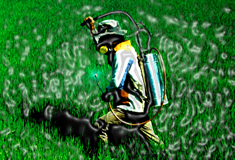
As the weather rapidly gets hotter, people tend to spend more time traveling, camping, or simply sitting in their backyard gardens. However, it's not just people who come out when the weather becomes nicer; many insects, such as mosquitoes, bees, and ticks, also become more active. When Shabbat comes and these nuisances are around, we need to know what is permitted to do in order to keep them away.
There are two Torah prohibitions that involve keeping insects away: trapping and killing. Both are permitted if the insect has a poisonous bite, such as a snake or scorpion. Additionally, if there is a bee near a person who is allergic to its sting, it is permitted to kill the bee even if it is not actively chasing the person but is simply in an area that the person cannot leave (שמירת שבת כהלכתה פרק כה אות א’).
On the other hand, if there is an insect that causes discomfort, such as a fly, cricket, or mosquito that buzzes in one's ear and prevents sleep or is simply annoying, one may not trap or kill them. Additionally, one is not even allowed to move these insects, as they are considered muktzeh. Chazal did not permit any of these actions solely to alleviate discomfort or annoyance(שם אות ד) .
In the event one sees a tick on his body on Shabbat, he must remove it since ticks are potentially dangerous and can transmit diseases. The prohibition against trapping does not apply in cases where there is a health risk. Therefore, removing a tick from one's body is not only permitted but required to prevent harm. The most common way to remove ticks is with a pair of tweezers, which can be used on Shabbat. It is important to carefully grasp the tick as close to the skin's surface as possible and pull upward with steady, even pressure to ensure that no parts of the tick's limbs remain embedded in the body. This method is essential for health reasons and is permitted on Shabbat to prevent any potential danger or infection.
Similarly, for mosquitoes, even though they are not dangerous, one may trap them if they are on one's body ready to bite. However, one should try to avoid killing them. If the mosquitoes are not on the body yet, one should chase them away without trapping them(סימן שטז ס״ט) .
Using Repellents
While many actions are restricted on Shabbat, using pre-applied insect repellents such as 'Off,' a substance that deters insects or other pests from approaching or settling, is permissible. If you anticipate insect problems, you can apply repellent on Shabbat, as there is no prohibition against applying such sprays on one's body to keep the insects off. This helps in preventing discomfort without violating any Shabbat prohibitions.
One is also allowed to smear a liquidy lotion on his body or clothing to keep insects away on Shabbat. However, it's important to avoid using thick creams. Using a liquidy lotion to repel insects on Shabbat is permissible, as it does not constitute a violation of smearing, known as memareach.
Insect Traps
Setting up insect traps before Shabbat is another solution. These traps can work throughout Shabbat without any further action needed, providing a way to manage insects without violating any prohibitions.
Using insect aerosol sprays
Although insect aerosol sprays are not considered muktzeh on Shabbat(שש״כ פכ״ה הערה כח) , it's essential to use them in accordance with halacha. Here's how you might approach this:
1. Avoid Direct Contact: Refrain from spraying directly on the insects, as this action may result in their death, which is prohibited on Shabbat.
2. Provide an Escape Route: If spraying in an enclosed space, such as a closed room, ensure to leave a window or door open to allow the insects a means of escape(אור לציון ח״ב עמוד רמה) .
Dead insects
In the event that a bee or fly dies in a house where people spend time and it disturbs them, it may be removed. Although an insect is muktzeh, when it's dead and causes discomfort, it is considered graf shel reyi and may be removed(פרמ״ג משב״ז סימן שטז סק״ח) .
In places with many bugs where one needs to use toilet facilities and sees live flies or other bugs in the water, which are not yet dead, he may flush the toilet even though they will likely die. This allowance stems from the principle that certain actions may be permitted for the dignity of a person. In this case, flushing the water after using the bathroom prevents potential embarrassment(מנחת יצחק ח״י סימן כז) .
Applying medicinal cream
If a person is bitten by a mosquito or another insect and experiences severe pain, or if he suffers from an allergic reaction, he may apply a cream or medication to the affected area on Shabbat.
There are two separate halachic issues involved in applying cream on Shabbat: refuah (using medication on Shabbat) and memare'ach (the prohibition of smoothing or spreading a substance).
Regarding refuah, Chazal prohibited taking medication on Shabbat primarily in cases of ordinary discomfort or minor ailments. However, when the pain is severe, to the extent that it causes a person significant distress, confines him to bed, or there is concern that the condition may worsen or become infected, the prohibition does not apply in the same manner. Therefore, a person suffering from a significant allergic reaction may use medication, since his condition is considered more than ordinary discomfort.
Regarding the concern of memare'ach, applying a cream raises the question of whether spreading the substance smoothly onto the skin constitutes a prohibited act. Many Poskim follow the opinion of the Magen Avraham, who permits applying creams when the intention is not merely to smooth the surface but rather to allow the substance to be absorbed into the skin. According to this view, applying medicinal cream is permitted in such circumstances.
Those who wish to follow the stricter opinion should avoid rubbing the cream into the skin and instead apply it by placing the cream on the affected area and gently dabbing or spreading it without smoothing it in.
There are two Torah prohibitions that involve keeping insects away: trapping and killing. Both are permitted if the insect has a poisonous
On the other hand, if there is an insect that causes discomfort, such as a fly, cricket, or mosquito that buzzes in one's ear and prevents sleep or is simply annoying, one may not trap or kill them. Additionally, one is not even allowed to move these insects, as they are considered muktzeh. Chazal did not permit any of these actions solely to alleviate discomfort or annoyance(שם אות ד) .
In the event one sees a tick on his body on Shabbat, he must remove it since ticks are potentially dangerous and can transmit diseases. The prohibition against trapping does not apply in cases where there is a health risk. Therefore, removing a tick from one's body is not only permitted but required to prevent harm. The most common way to remove ticks is with a pair of tweezers, which can be used on Shabbat. It is important to carefully grasp the tick as close to the skin's surface as possible and pull upward with steady, even pressure to ensure that no parts of the tick's limbs remain embedded in the body. This method is essential for health reasons and is permitted on Shabbat to prevent any potential danger or infection.
Similarly, for mosquitoes, even though they are not dangerous, one may trap them if they are on one's body ready to bite. However, one should try to avoid killing them. If the mosquitoes are not on the body yet, one should chase them away without trapping them(סימן שטז ס״ט) .
Using Repellents
While many actions are restricted on Shabbat, using pre-applied insect repellents such as 'Off,' a substance that deters insects or other pests from approaching or settling, is permissible. If you anticipate insect problems, you can apply repellent on Shabbat, as there is no prohibition against applying such sprays on one's body to keep the insects off. This helps in preventing discomfort without violating any Shabbat prohibitions.
One is also allowed to smear a liquidy lotion on his body or clothing to keep insects away on Shabbat. However, it's important to avoid using thick creams. Using a liquidy lotion to repel insects on Shabbat is permissible, as it does not constitute a violation of smearing, known as memareach.
Insect Traps
Setting up insect traps before Shabbat is another solution. These traps can work throughout Shabbat without any further action needed, providing a way to manage insects without violating any prohibitions.
Using insect aerosol sprays
Although insect aerosol sprays are not considered muktzeh on Shabbat(שש״כ פכ״ה הערה כח) , it's essential to use them in accordance with halacha. Here's how you might approach this:
1. Avoid Direct Contact: Refrain from spraying directly on the insects, as this action may result in their death, which is prohibited on Shabbat.
2. Provide an Escape Route: If spraying in an enclosed space, such as a closed room, ensure to leave a window or door open to allow the insects a means of escape(אור לציון ח״ב עמוד רמה) .
Dead insects
In the event that a bee or fly dies in a house where people spend time and it disturbs them, it may be removed. Although an insect is muktzeh, when it's dead and causes discomfort, it is considered graf shel reyi and may be removed(פרמ״ג משב״ז סימן שטז סק״ח) .
In places with many bugs where one needs to use toilet facilities and sees live flies or other bugs in the water, which are not yet dead, he may flush the toilet even though they will likely die. This allowance stems from the principle that certain actions may be permitted for the dignity of a person. In this case, flushing the water after using the bathroom prevents potential embarrassment(מנחת יצחק ח״י סימן כז) .
Applying medicinal cream
If a person is bitten by a mosquito or another insect and experiences severe pain, or if he suffers from an allergic reaction, he may apply a cream or medication to the affected area on Shabbat.
There are two separate halachic issues involved in applying cream on Shabbat: refuah (using medication on Shabbat) and memare'ach (the prohibition of smoothing or spreading a substance).
Regarding refuah, Chazal prohibited taking medication on Shabbat primarily in cases of ordinary discomfort or minor ailments. However, when the pain is severe, to the extent that it causes a person significant distress, confines him to bed, or there is concern that the condition may worsen or become infected, the prohibition does not apply in the same manner. Therefore, a person suffering from a significant allergic reaction may use medication, since his condition is considered more than ordinary discomfort.
Regarding the concern of memare'ach, applying a cream raises the question of whether spreading the substance smoothly onto the skin constitutes a prohibited act. Many Poskim follow the opinion of the Magen Avraham, who permits applying creams when the intention is not merely to smooth the surface but rather to allow the substance to be absorbed into the skin. According to this view, applying medicinal cream is permitted in such circumstances.
Those who wish to follow the stricter opinion should avoid rubbing the cream into the skin and instead apply it by placing the cream on the affected area and gently dabbing or spreading it without smoothing it in.



הוסף תגובה
עוד מהרב שי טחן
עוד בנושא הלכה